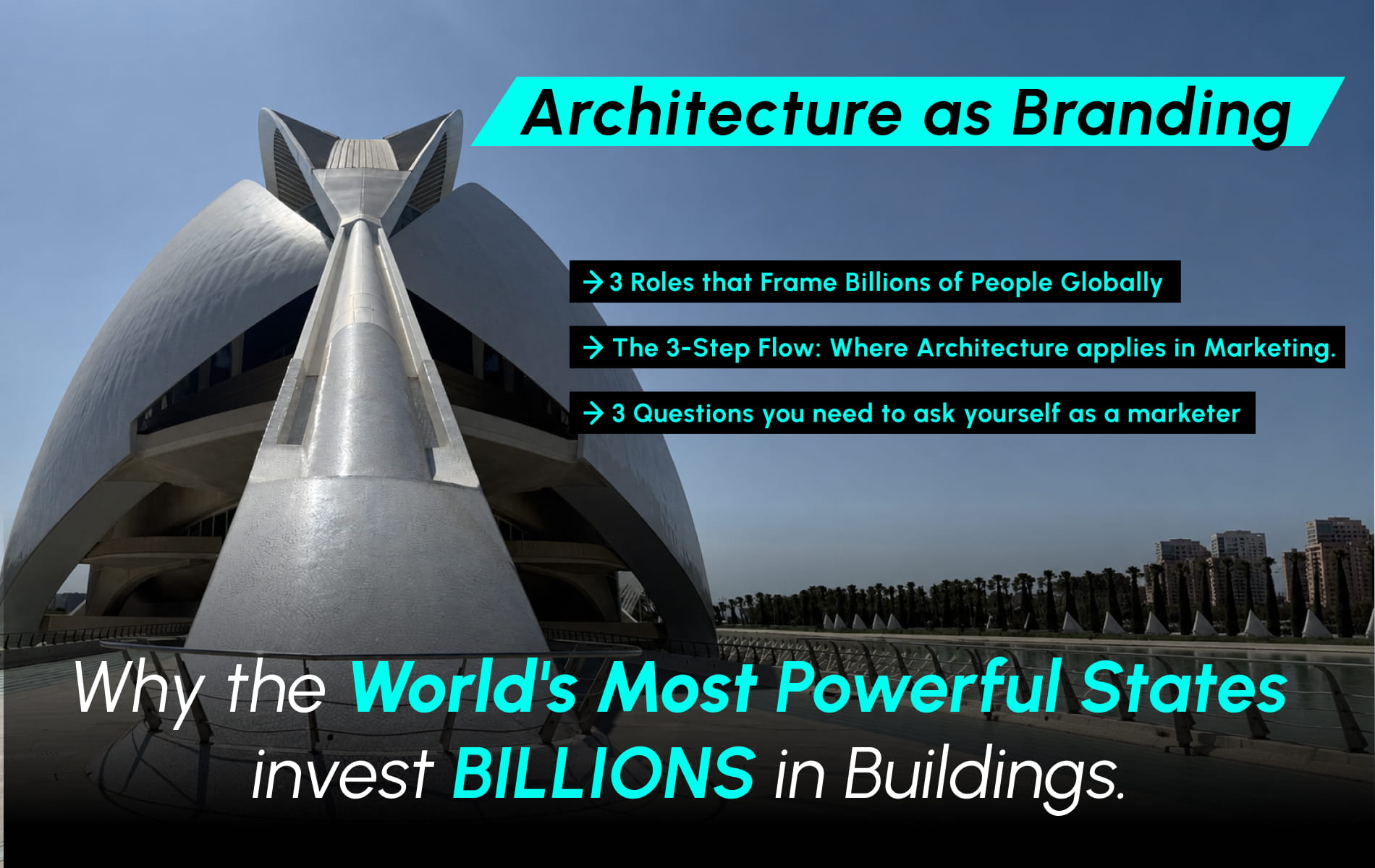
Did you ever wonder why you feel in a really special way in certain places? Whether it’s a nice restaurant, an opera, a central market, or an auditorium space, you just KNOW when a place makes you feel in a certain way.
And it’s not magic; it happens because Architecture has an incredible role in framing your perception of things and experiences. It activatesYour Visual Sense, one of the 5 fundamental senses that shape our lives. (What we see, smell, hear, touch, and taste)
You are framed more than you think by your surroundings.
Marketing is never just ads, campaigns, and calls to action telling you what to buy and try; it’s a complex flow of experiences that make you see things differently, and Architecture has a tremendous role in the play.
3 Roles that Frame Billions of People Globally
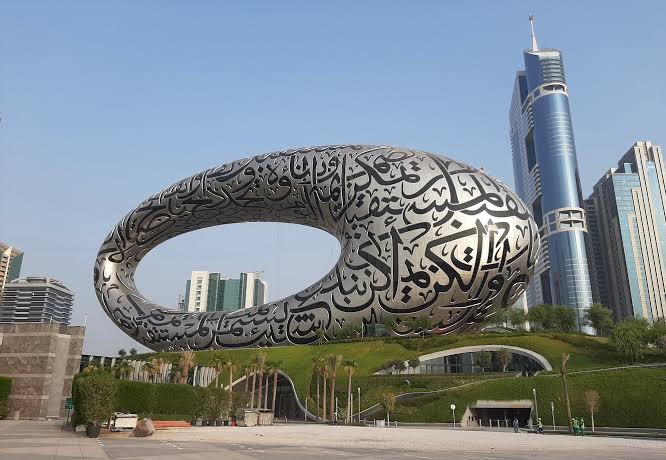
(Museum of the future, Dubai)
Just think of the most impressive buildings in the world and their roles in history. They always had 3 unspoken objectives, all related to Branding & Marketing at a country level:
Role #1 To Express Power and Authority: Some of the most grandiose buildings in history were built with a much bigger role than just tourism: politics and power. Power of a state, influence of a nation, the wealth of a culture, the authority of a certain institution. Architecture is just the vehicle to translate a powerful message beyond words. Examples:
- Basilica San Pietro (Vatican)
- Palace of Parliament (Romania)
- The Pentagon (USA)
- The Kremlin (Russia)
- Great Hall of the People (China)
- The Great Wall of China)
- Buckingham Palace (UK)
Role #2 To Attract Resources & Boost Incomes: The second role of Imposing Architecture is, of course, an economic one: Attracting constant resources to the state – a long-shot investment strategy which is envisioned to last for decades, sometimes centuries. Examples:
- Eiffel Tower (France)
- Louvre Museum (UK)
- Empire State Building (USA)
- Burj Khalifa (Dubai)
- Sydney Opera House (Australia)
- Taipei 101 (Taiwan)
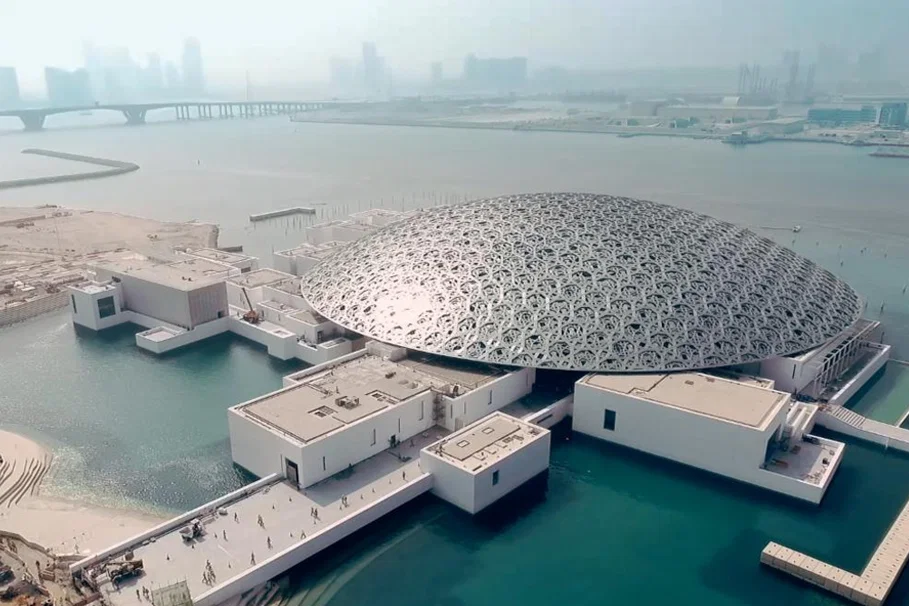
(Louvre, Abu Dhabi)
Role #3 To Shape Mindsets, Inspire & Educate: Education is barely the last role monumental architectural projects are built for. And that is not because education is not important, but because the costs of groundbreaking construction will never be justified by inspiration to cover the billing books. Examples:
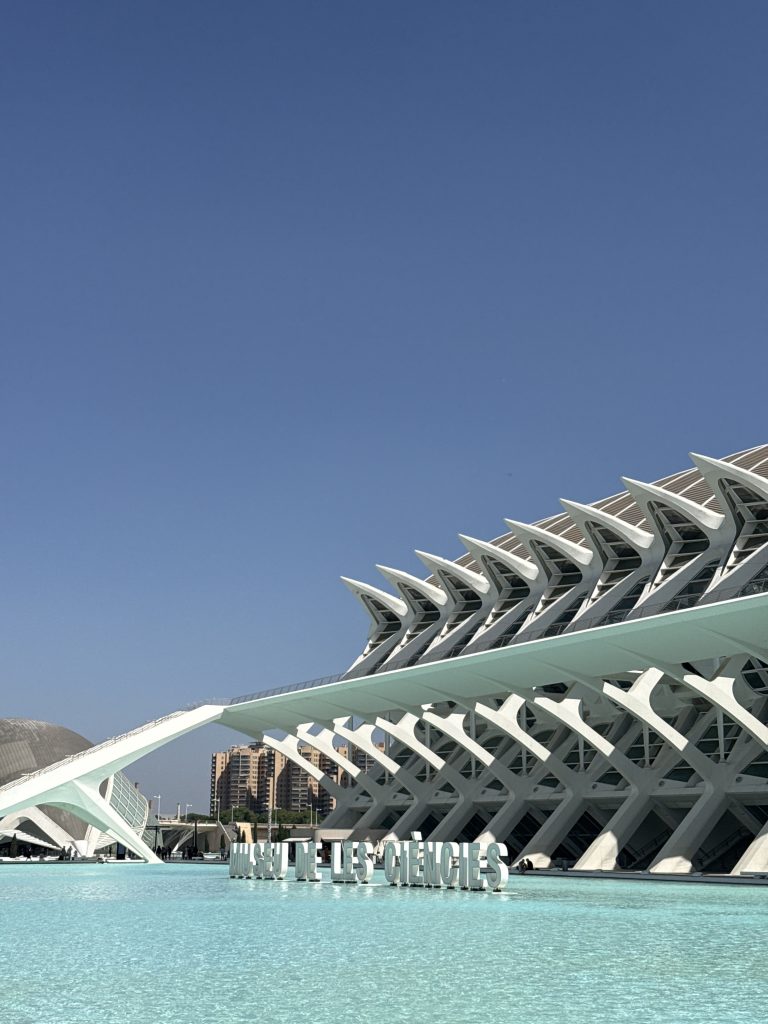
- Valencia Science Museum by Santiago Calatrava
- Louvre Abu Dhabi
- King Abdulaziz Center for World Culture (Saudi Arabia)
- Museum of the future (Dubai)
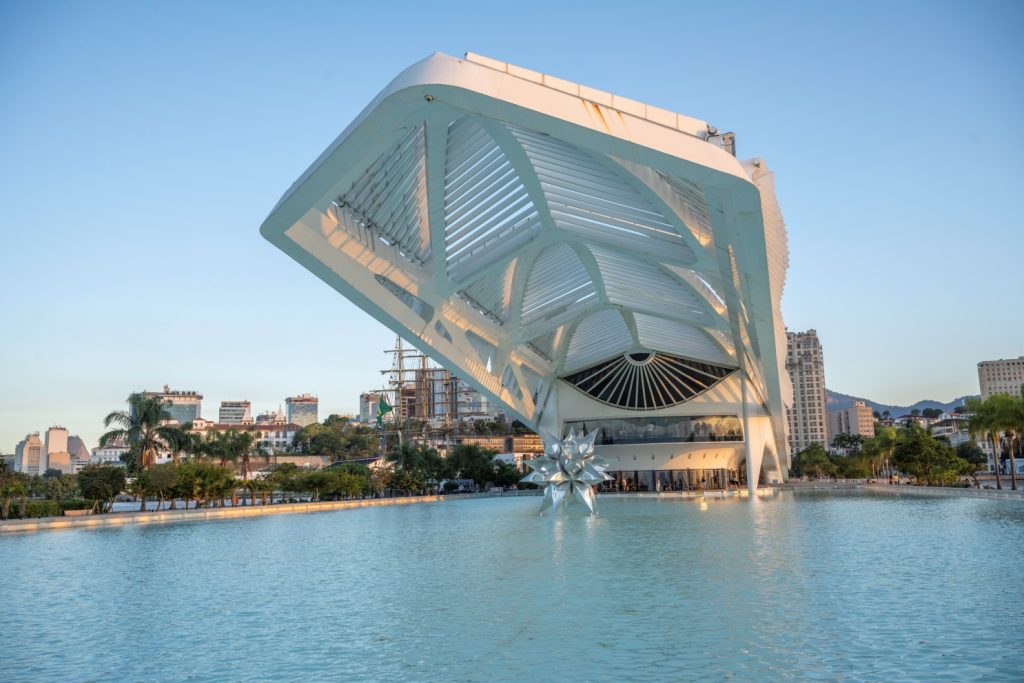
- Museum of Tomorrow (Rio de Janeiro)
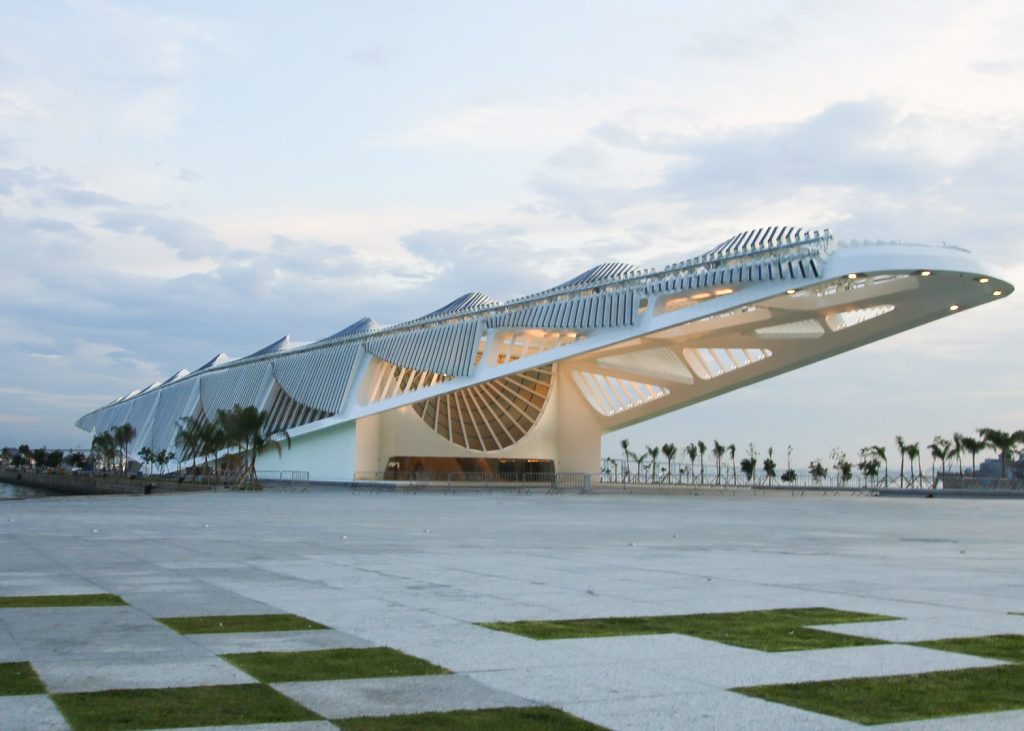
What does expensive mean when it comes to statement architectural projects?
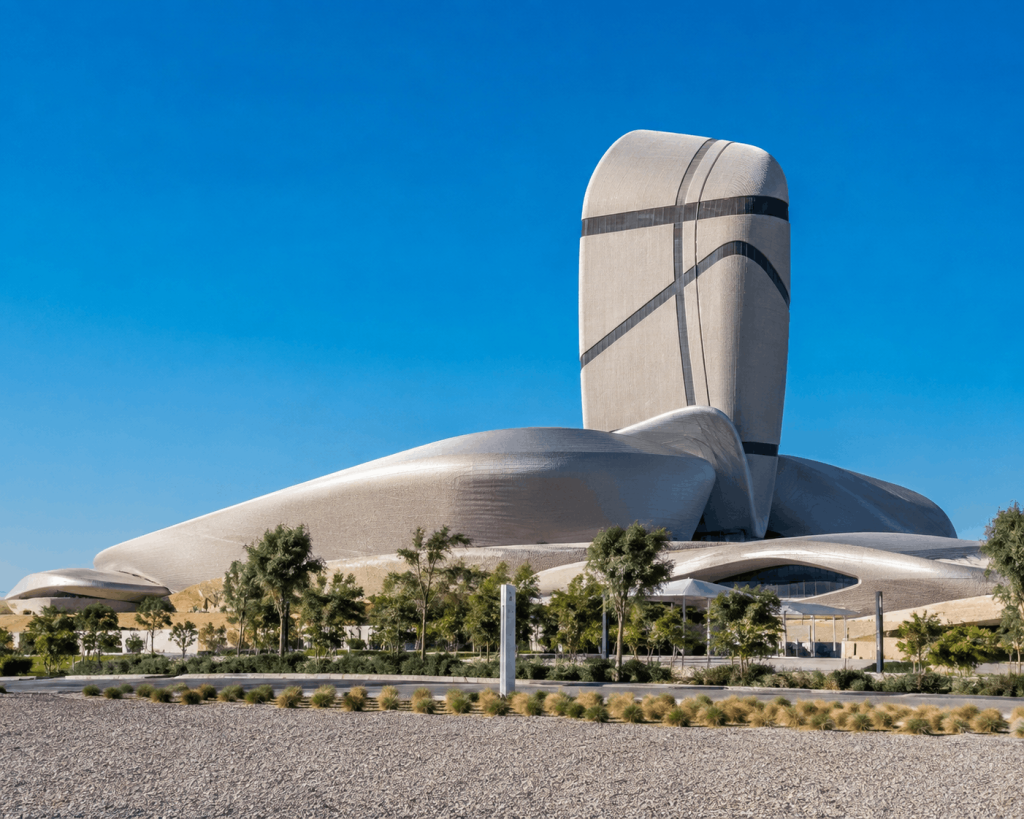
(King Abdulaziz Center for World Culture)
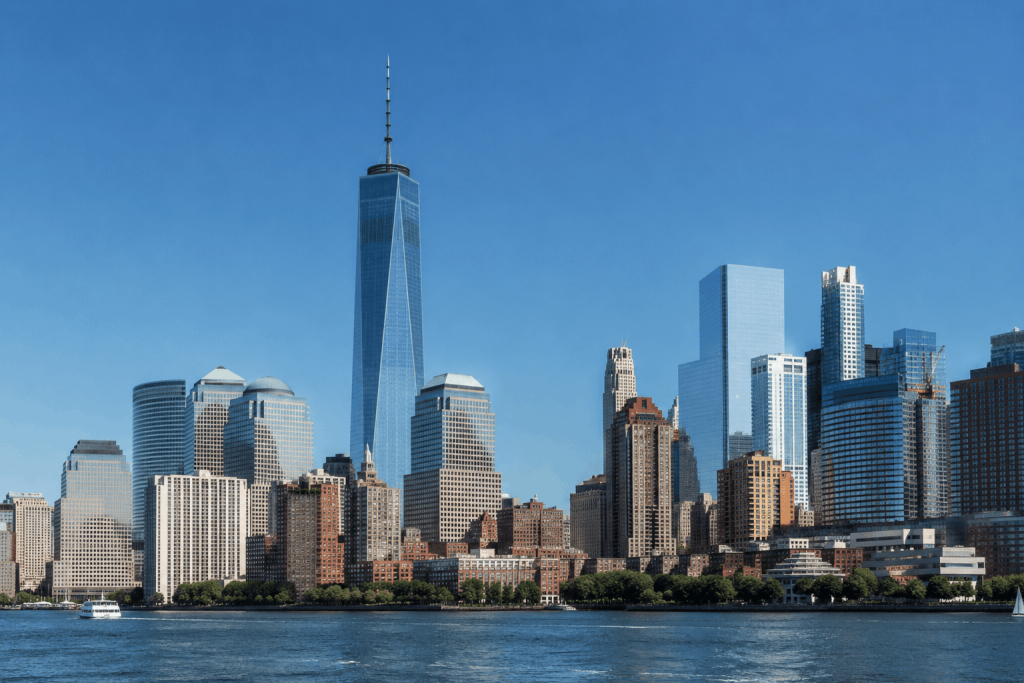
#1 World Trade Center, United States
Estimated cost: US$20+ billion (Completed: 2002 to 2022)
Purpose: Commercial, memorial, transportation, and urban regeneration
Why it’s extraordinary: The largest reconstruction project in New York City’s history following the September 11 attacks.
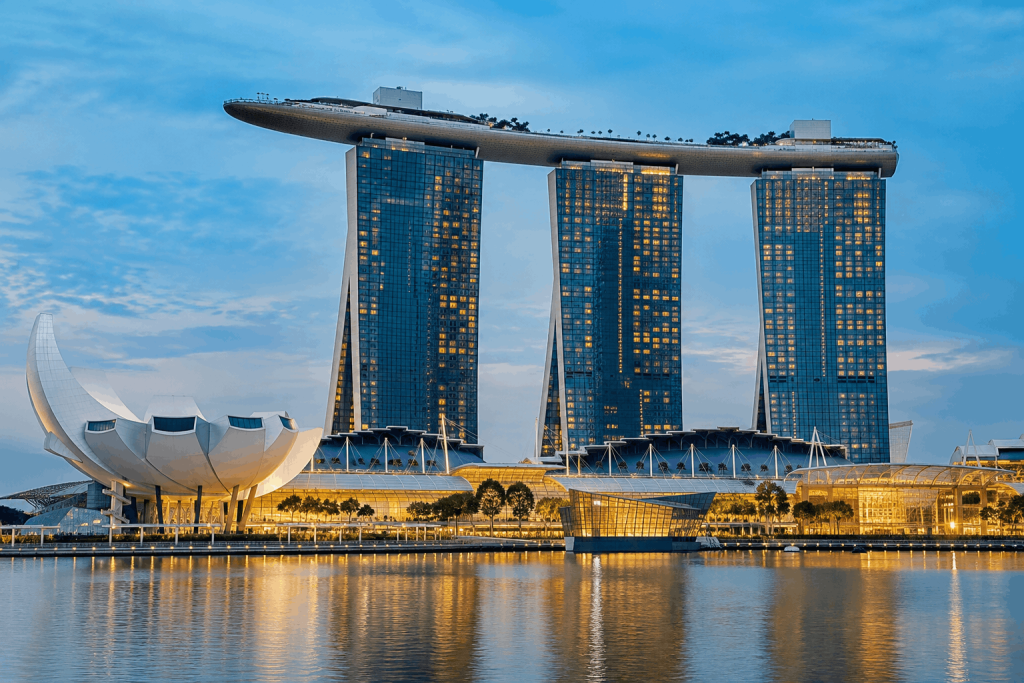
#2 Marina Bay Sands, Singapore
Estimated cost: US$5.7 billion (Completed: 2010)
- Three towers connected by the world’s largest rooftop SkyPark.
- Designed as the centerpiece of Singapore’s transformation into a global tourism and business hub.
- Integrates a luxury hotel, casino, convention center, theaters, museum, restaurants, and high-end retail.
Today, it is one of the world’s most recognizable modern architectural icons.
#3 City of Arts and Sciences, Spain
Estimated cost: ≈ €1.3 billion (around US$1.4 to 1.6 billion) – Completed between 1991 to 2009
- Built on the former Turia riverbed as a visionary cultural district.
- Combines architecture, science, education, performing arts, and marine research into a single landmark destination.
- Includes the Opera House, Science Museum, L’Hemisfèric, Oceanogràfic (Europe’s largest aquarium), and Ágora.
Has become the defining visual identity of Valencia and one of Europe’s most celebrated examples of architecture as city branding.


The 3-Step Flow: Where Architecture applies in Marketing.
Architecture frames your perception: whether it’s environmental design, the geometry of an office, the production for a show, or the Reception of a hotel, architecture shapes your whole experience through a 3-step flow:
Context → Space → Perception
Now think about the scenarios below:
- (Context) →You join a Fashion show → (Space) in a modern space designed by Mies van der Rohe → (Perception) You associate that brand with contemporary style (transfer from Mies van der Rohe’s architectural style).
- (Context) → You join a technology conference → (Space) in a futuristic venue with immersive LED installations → (Perception) You associate the organizers with Hyper-Innovation.
- (Context) → You walk into a luxury hotel → (Space) through a grand marble lobby with high ceilings and curated scents → (Perception) You perceive the brand as premium, exclusive, and trustworthy.
- (Context) → You visit an Apple Store → (Space) in a minimalist, bright, uncluttered space → (Perception) You associate the products with simplicity, precision, and quality.
- (Context) → You attend a Michelin-starred restaurant → (Space) in an intimate dining room with carefully orchestrated dim lighting and acoustics → (Perception) it enhances the entire food experience smoothly, before you even taste it.
- (Context) → You visit a contemporary art museum → (Space) with large galleries and tall walls → (Perception) you perceive the artworks as culturally significant and monumental, due to their display, before you even get to analyse their details.
- (Context) → You enter a corporate headquarters → (Space) featuring open collaboration areas, greenery, and transparent meeting rooms → You perceive the company as innovative and collaborative.
- (Context) → You attend a product launch → (Space) inside a black-box theater where every light, sound, and reveal is choreographed → You believe the product is groundbreaking before it’s even demonstrated.
- (Context) → You walk into a wellness retreat → (Space) surrounded by natural materials, water features, and quiet open landscapes → (Perception) You immediately feel calm and perceive the experience as restorative.
- (Context) → You visit a flagship automotive showroom →(Space) where vehicles are displayed like museum exhibits under dramatic lighting → (Perception) You perceive the cars as aspirational assets.
3 Questions you should ask yourself to identify how you could integrate these insights into your Marketing / Branding Flows:
- #1 Is there a space that is used below its potential in my marketing projects? Whether you’re thinking about an event, a product launch, a brand showcases, or your agency office, is there a space that if it’s better valued can amplify your core customer journey?
- #2 Did I think of the locations/cities I chose, the venues I select, or the production I put together for my marketing/ brand activations as a fundamental strategic pillar in the entire customer perception of my brand?
- #3 How can I leverage architectural geometry or design in the spaces I own/use to enhance customer experience?
Remember this:
Architecture is often treated as the background. In reality, it’s one of the first messages your audience receives. Long before someone reads your headline, hears your speech, or tastes your product, they have already started forming an opinion based on the space surrounding the experience.
That is why some of the world’s greatest brands, institutions, museums, hotels, airports, and cities know architecture is not construction; it’s the ultimate vehicle to create a powerful brand statement.
The next time you design a marketing campaign, don’t just ask, “What will people see?” Ask, “Where will they experience it?“
Because every space tells a story. The only question is whether you’re the one writing it.
So go, write yours! 🙂
Love, A